
As printed in Eighty Degrees Magazine: Volume 2.
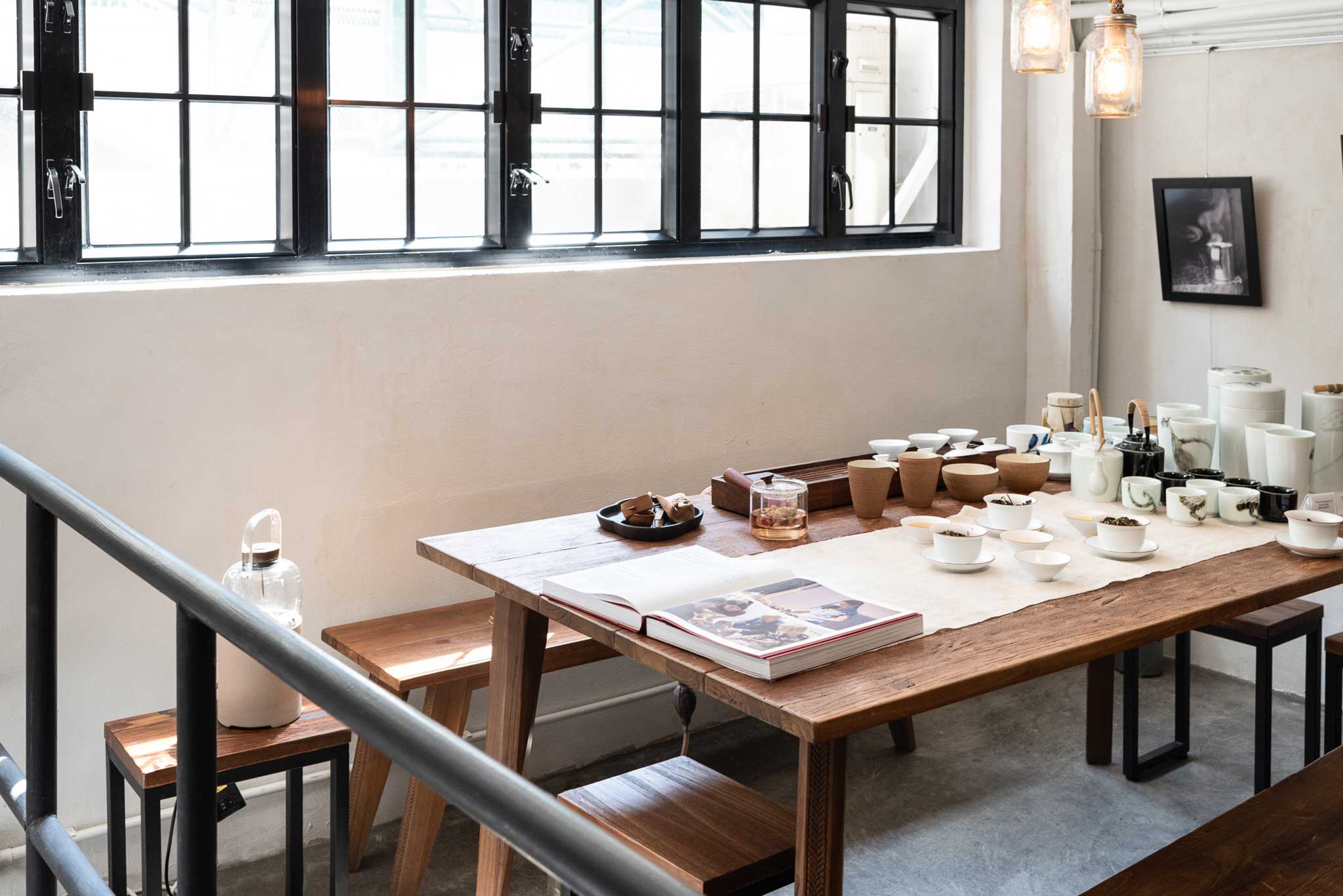
Recently, I had the pleasure of experiencing a private tea tasting at PLANTATION by Teakha in Hong Kong. As for the technique, they use a simplified fusion of two tea ceremony types: Taiwanese and Chinese gong fu. This means they incorporate a teapot and multiple small cups made out of clay and porcelain. Many teas are brewed, but only for a short time. A lovely woman named Lin educated me in the process as well as the tea varietals that the shop sells. She proceeded to conduct the ceremony with poise and wisdom.
The first tea she brewed was their shoumei, or “eyebrow tea,” given the name because of its shape. White teas are pressed into a ball and kept for about five to ten years so they can develop more character. Pulling a cup close to her mouth she closed her eyes and breathed in through her nose. It is a special technique to have a smelling cup in order to capture more fragrance, then transfer the tea into the drinking cup. As she brewed the first cup Lin explained that tea was akin to wine; There is a difference from one year to the next. The outcome of the harvest is based on both terroir and the weather. Upon visiting a plantation in Darjeeling, India, she was able to see how the tea’s character varied by as little as a single plot.
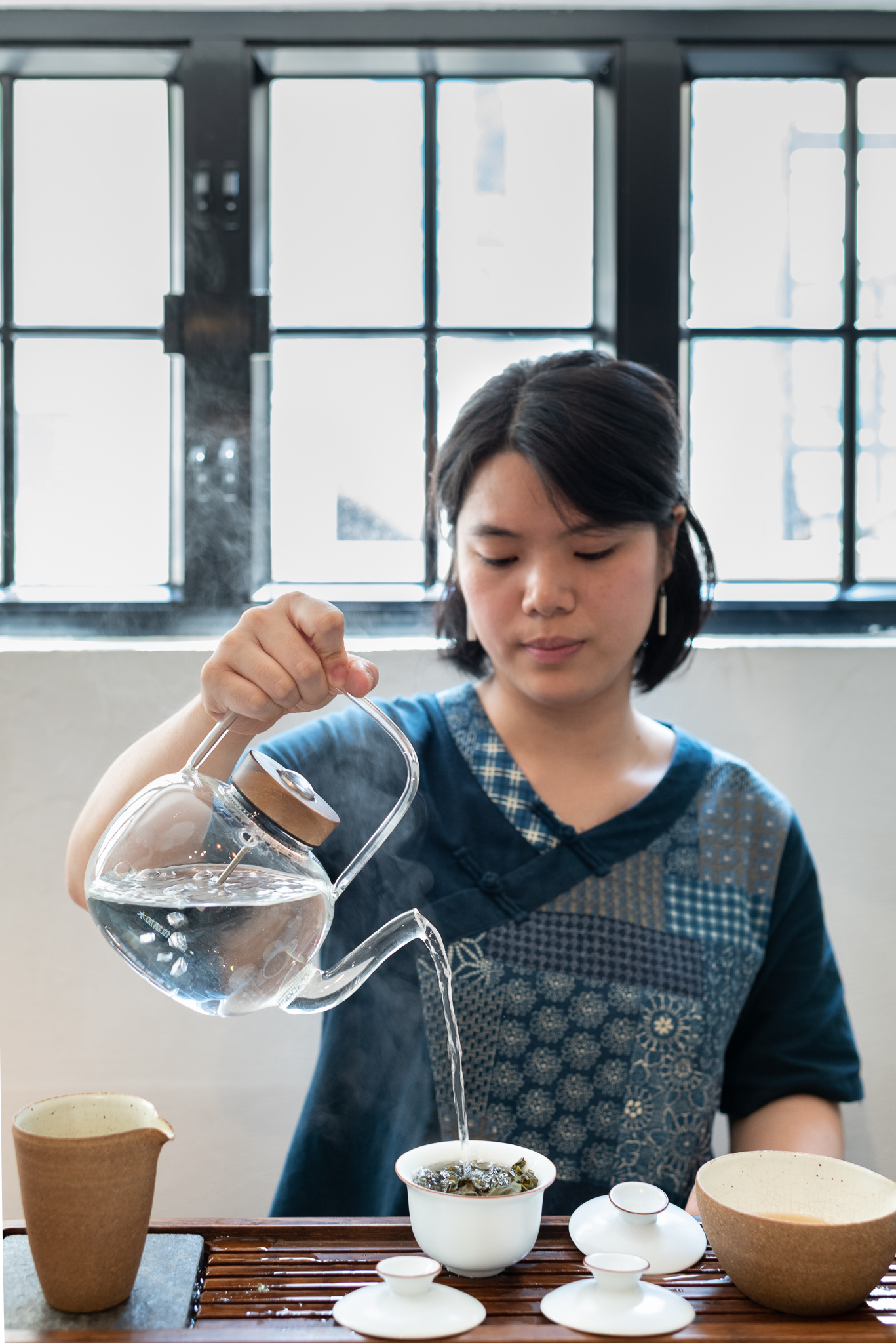
With one finger she touched the tea leaves inside the brewing cup. My expression must have been amusing because she let out a laugh and explained that it was part of the presentation: people will do this to gauge the quality of the tea leaves and the skill of the tea master who processed them. The softer the better, apparently. White tea is the least processed of them all, so the full shape of the leaf is kept intact. Low-grade tea is chopped into pieces. Since it’s only lightly roasted, the antioxidants and nutrients are well preserved.
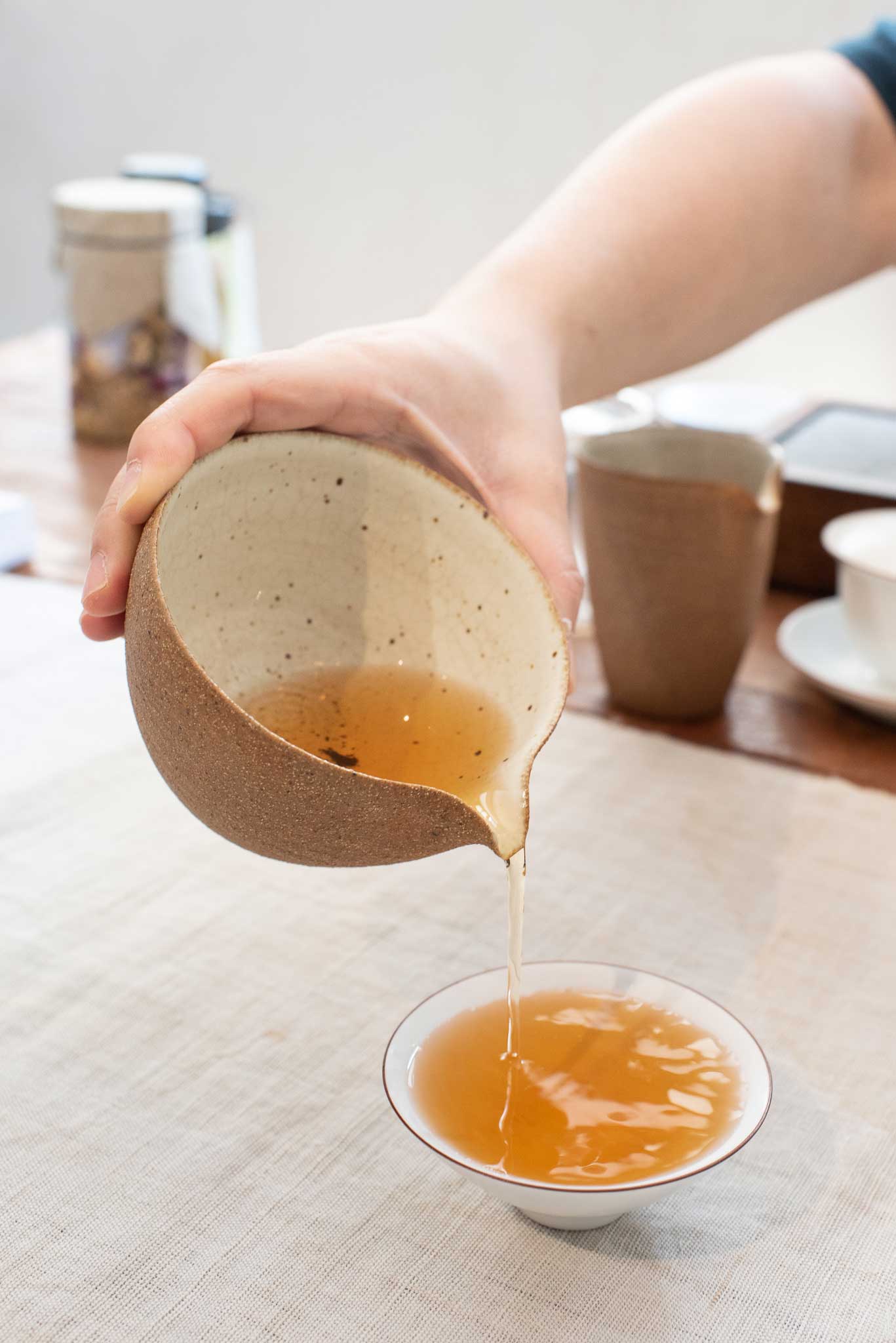
Lin placed a porcelain cup before me; I marvelled at the bright apricot hue staring back at me. What a delicate aroma. Honey? No–pollen. We traded tasting notes and proceeded to try a second brew. Then a third and fourth. The first and last were the lightest, like water; it had come full circle. The next tea was intoxicating and overwhelmingly floral. I watched as Lin used a wooden scoop to measure out jasmine pearls from the Fujian province of China.
“Do you know the folktale behind Dragon Pearl Jasmine?” Lin enquired. I shook my head gently. “Well,” she began, “a long time ago there was a girl whose brother was very sick, and so she needed medicine to heal him. She went into the village but no one would help her, so she went into the mountains and prayed to the dragon that was said to live there. She was desperate, and the dragon was moved by her plea. So, he flew into the sky and sent drops of rain down to Earth. Where they fell a tree grew in its place. The girl used the leaves to make into tea, and cured her brother with it.” She paused for effect, “Hence the name: the dragon’s pearls.”
Traditionally this green tea is scented by a layer of jasmine flowers until it has absorbed their full fragrance. The flowers are then replaced again and again. The most expensive ones are perfumed with seven rounds of jasmine infusion, removing the flowers at the end so that only the aroma remains. I found it satisfying to watch the pearls unfurl in the hot water, filling the brewing cup almost to the brim. The initial brew was slightly strong, floral, and the colour of amber.
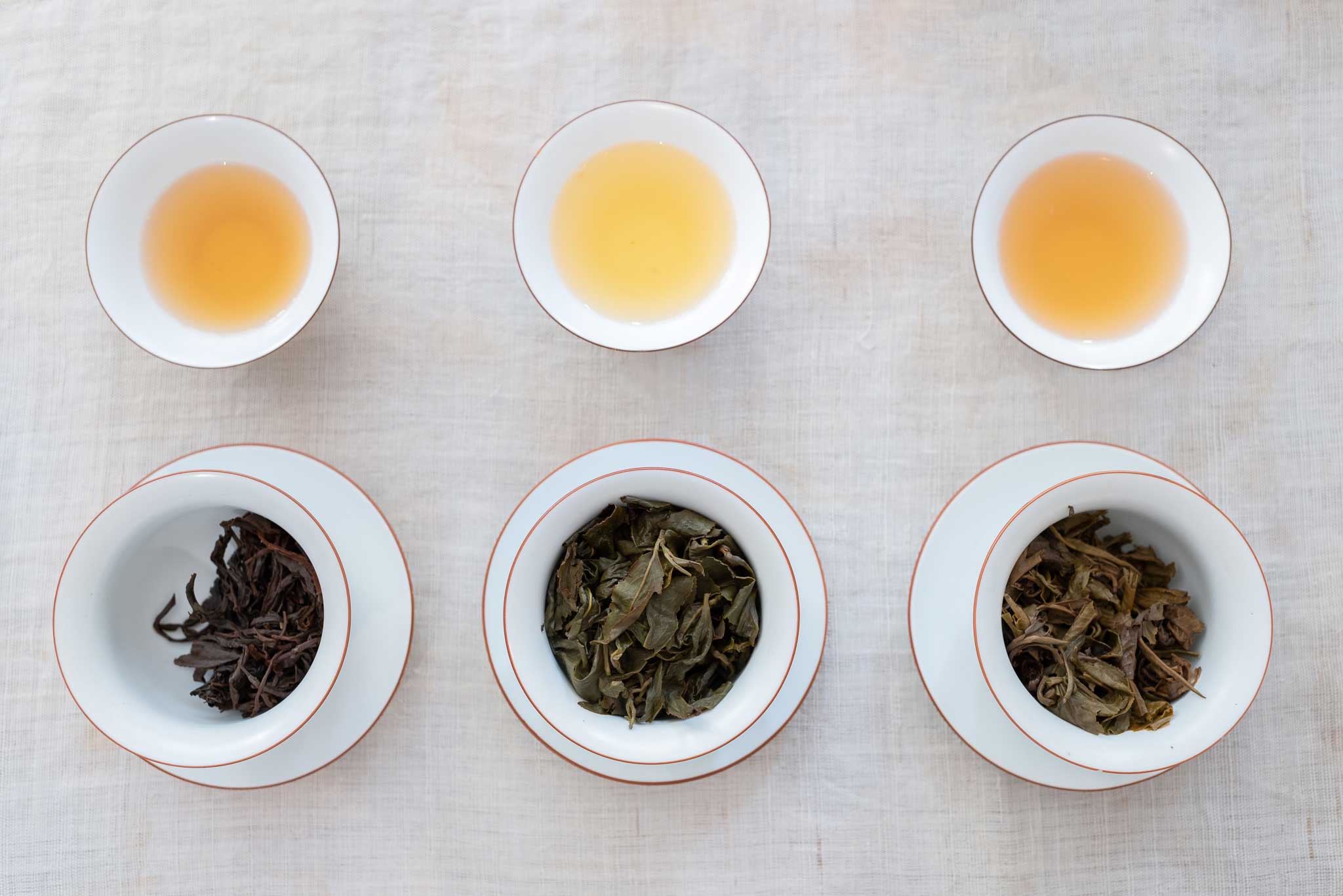
We moved on to their High Mountain Oolong for the next tasting. The Alishan area in Taiwan produces sweeter, stronger wulongs: the cold mountain air causes the buds to grow slower and become more dense. Lin told me that PLANTATION chooses to work with small, family-run tea farms because they usually have a story behind them and take their tea seriously. Once brewed, the leaves opened up to a considerable size. She pointed out red around the broken leaf edges, explaining that this is part of a process called “bruising.” The tea leaves are tossed in a bamboo basket and rolled to shape, thus bruising them and starting the oxidation process. This is an important step to create richer flavour profiles.
Typically, you can get about seven to eight rounds of tea from a few grammes of wulong leaves. We only tasted two brews this time, both with a straw-coloured appearance. Lemon verbena seemed dominant on the nose for me, and Lin said it always reminded her of rain in the forest. Next, we tried PLANTATION’s version of Earl Grey called “Red Jade with Bergamot Peel.” Usually scented with oil, this particular blend is made from bergamot orange rinds grown on an organic farm in Taiwan along with the Red Jade–a lighter cultivar of black tea.
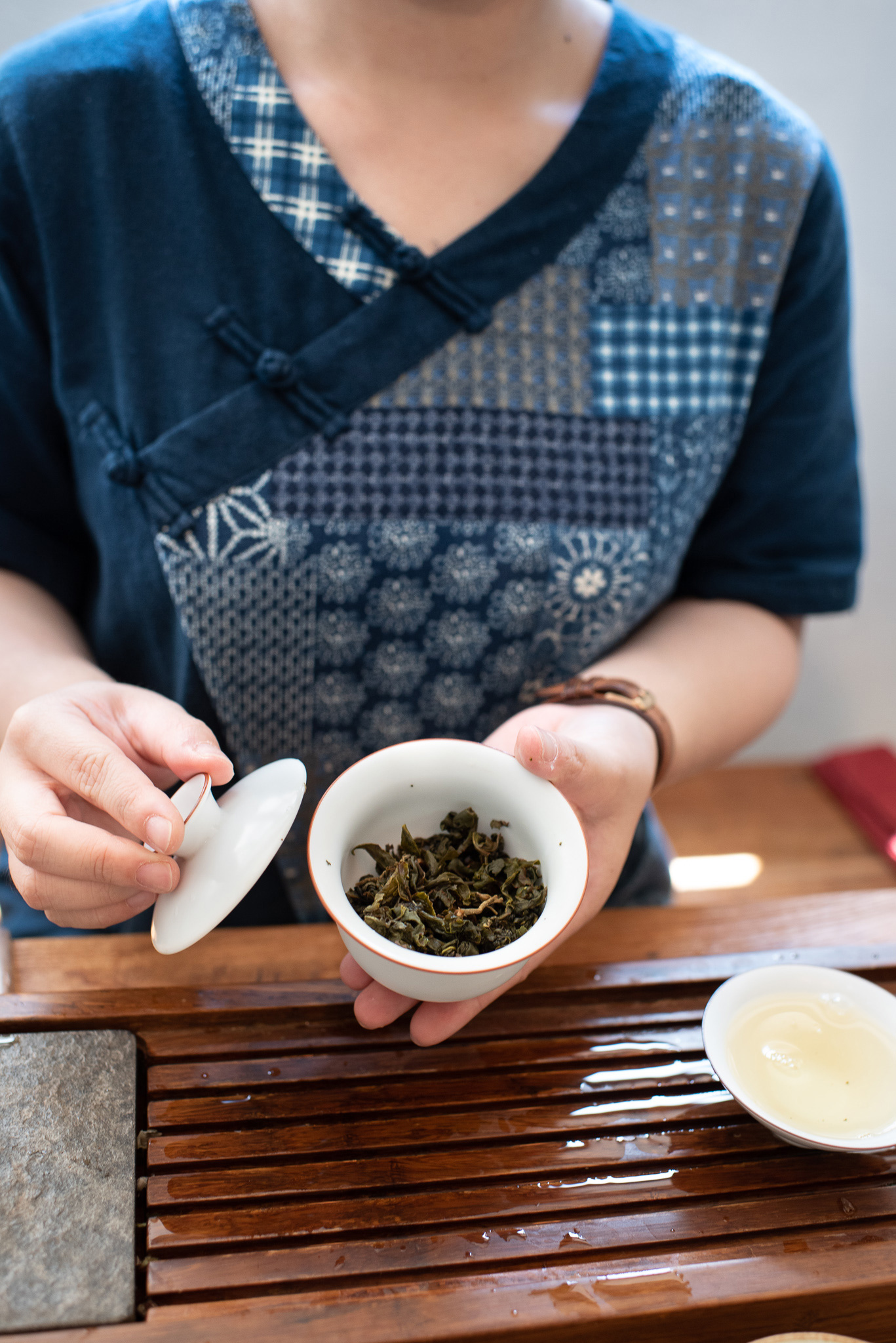
I learned that during Japan’s colonization of Taiwan, the Japanese government took great effort to help them produce tea. Now, the Taiwanese government has taken over the research center, producing new teas and studying different climates throughout the country. Once they invent a new cultivar it is given a name and number: Red Jade is known as No. 18. The last tea we enjoyed is a special blend that PLANTATION’s owner came up with: Chamomile Reverie. Made up of chrysanthemum, chamomile, and globe amaranth, it produces a warm pink hue when brewed. While subtly sweet in taste and beautiful to look at, the tea is also excellent for skin health and detoxing.
Our afternoon of delving into the world of tea had come to an end, but I sensed that I would one day return to PLANTATION to continue my exploration. I professed my gratitude for her expert guidance through an exquisite tea tasting and bid farewell, until next time.